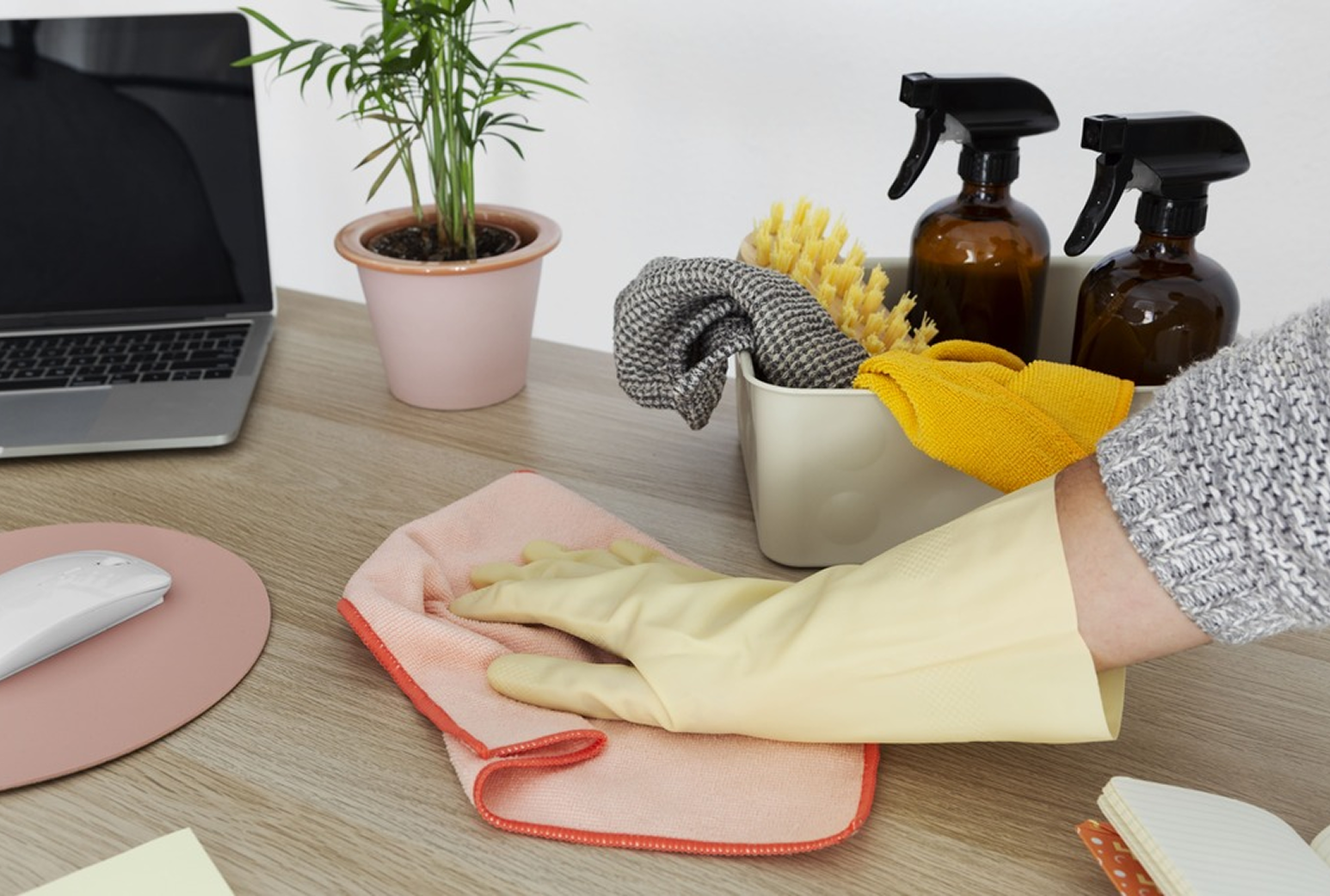
For many people, maintaining a clean home feels more difficult than the task itself should be. Across the United Kingdom, busy work schedules, commuting, and digital distractions often lead to postponed household chores that gradually accumulate into overwhelming clutter. Psychological research suggests that the main obstacle is not laziness or lack of discipline, but how the brain perceives effort and time.
Advertising
The “10-minute cleaning rule” has gained attention because it aligns with known cognitive principles. Instead of relying on motivation, it works by reducing mental resistance — the true barrier preventing people from starting tasks.
Why Cleaning Feels Mentally Heavy
The brain evaluates tasks based on perceived effort rather than actual duration. When people think about cleaning, they rarely imagine a small action such as wiping a surface or organising a shelf. Instead, the brain visualises the entire process: sorting, vacuuming, washing, and reorganising.
This creates what psychologists call task overload perception. The mind treats cleaning as a large, undefined project, triggering avoidance behaviour. Even simple chores begin to feel exhausting before they start.
Procrastination often occurs not because tasks are difficult, but because they appear indefinite.
The Psychology Behind the 10-Minute Rule
The 10-minute cleaning rule is straightforward: set a timer for ten minutes and clean only until the timer ends. After that, stopping is allowed without guilt.
This approach works because it changes how the brain evaluates effort. Ten minutes feels finite and manageable. The commitment appears small enough to bypass resistance mechanisms in the prefrontal cortex responsible for decision-making and self-control.
Once action begins, a psychological effect known as behavioural momentum takes over. Starting a task reduces mental friction, making continuation easier than stopping.
Many people continue cleaning beyond ten minutes, but the effectiveness lies in removing the pressure to do so.
The Zeigarnik Effect: Why Starting Matters
A key cognitive principle supporting this method is the Zeigarnik effect — the tendency of the brain to remember unfinished tasks more strongly than completed ones.
When a person begins cleaning, the brain registers the activity as an active goal. This creates mild cognitive tension that encourages completion. The task gains psychological importance simply because it has started.
Before starting, avoidance dominates. After starting, completion becomes more appealing.
Decision Fatigue and Environmental Stress
Clutter affects more than visual appearance. Research indicates that disorganised environments increase cognitive load because the brain continuously processes unnecessary stimuli.
Each visible object competes for attention, subtly draining mental resources. Over time, clutter contributes to stress, reduced focus, and decreased productivity.
Short cleaning sessions reduce environmental noise without requiring large time investments, improving mental clarity alongside physical order.
Why Short Sessions Work Better Than Long Cleaning Days
Many people postpone cleaning until weekends, expecting to complete everything at once. However, long sessions demand sustained motivation and physical energy, making them difficult to maintain consistently.
Short, frequent cleaning periods align better with habit formation. The brain prefers routines that require minimal effort and predictable timing.
Ten-minute sessions prevent accumulation of mess, meaning future cleaning requires less effort overall. Maintenance replaces recovery.
Habit Formation and Micro-Commitments
The 10-minute rule functions as a micro-commitment — a small behavioural promise easy to repeat daily. Habits form when actions become automatic responses to cues rather than conscious decisions.
Examples of effective cues include:
-
starting a timer after arriving home from work
-
cleaning while waiting for food to cook
-
tidying one area before bedtime
Consistency matters more than intensity. Repeated small actions reshape behavioural patterns over time.